
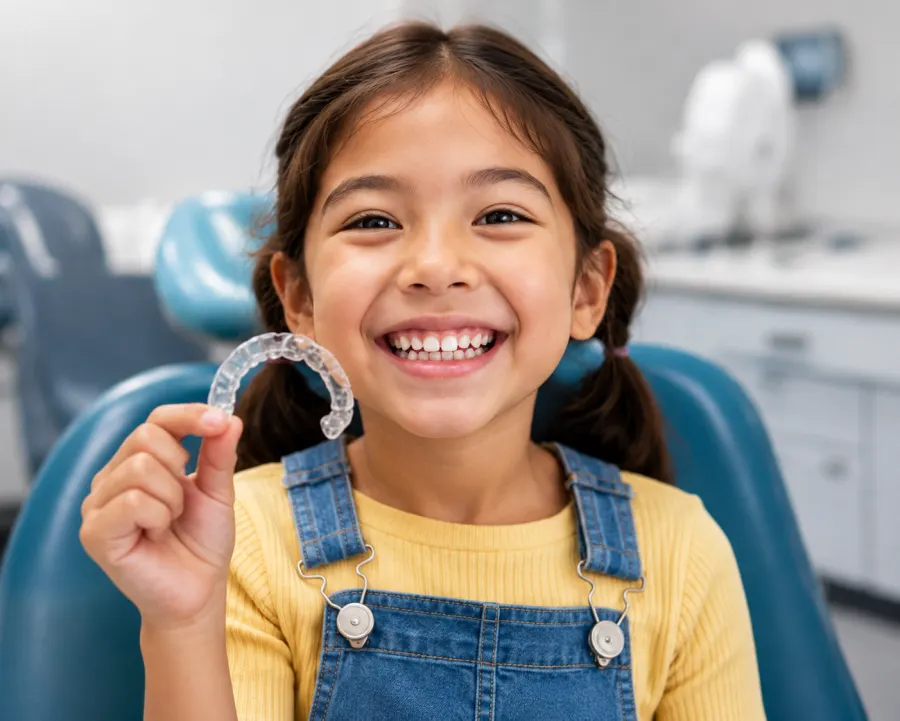
An early orthodontic evaluation is a chance to understand how a child’s teeth and jaws are developing. It does not automatically mean braces. Often, the best recommendation is to watch growth and wait.
Why children are evaluated around age seven
By approximately age seven, enough permanent teeth have usually arrived for an orthodontist to evaluate crowding, spacing, jaw relationships and how the bite is developing. Some concerns are easier to recognize while baby teeth and permanent teeth are present together. A dentist may recommend the visit, or a parent may notice protruding teeth, a crossbite, difficulty chewing or unusual tooth eruption.
The evaluation is primarily about timing. Many children do not need treatment at this age. OSSTL may recommend periodic observation so we can follow growth and permanent-tooth development, then begin care when it can be most efficient. Families interested in fixed treatment can also read about braces for kids.
When early treatment may help
Early, or Phase I, treatment is considered when acting during growth could create a meaningful benefit. Examples may include certain crossbites, severe crowding, protruding front teeth at greater risk of injury, harmful oral habits, space loss or jaw relationships that may become harder to manage later. The goal should be specific and understandable—not simply to start braces sooner.
Treatment might use a limited set of braces, an expander, a space-maintaining appliance or, for selected children, Invisalign First. The appliance follows the diagnosis. Parents should be told what the first phase is intended to accomplish and whether comprehensive treatment is likely after additional permanent teeth arrive.
Signs that warrant an orthodontic evaluation
Consider an evaluation when permanent teeth appear crowded or blocked, the upper and lower teeth do not meet normally, the jaws shift when closing, front teeth protrude prominently or baby teeth are lost unusually early or late. Persistent thumb or finger habits, mouth breathing concerns and difficulty biting can also justify a closer look.
These signs do not establish a diagnosis on their own. Growth patterns vary, and some irregularities improve naturally while teeth emerge. An orthodontist evaluates the complete bite and development rather than recommending care from a photograph or isolated symptom. Our common orthodontic problems guide explains several of these bite relationships.
Observation can be active care
When treatment is not needed, a growth-observation program can be valuable. Periodic visits allow the orthodontist to track eruption, identify loss of space and choose a better time for records or treatment. Observation avoids unnecessary appliances while keeping developing concerns from being overlooked.
Parents receive an explanation of what is being watched and when the child should return. If no treatment becomes necessary, the observation period still provided reassurance and informed timing. If comprehensive braces or aligners are later recommended, the family already understands how the bite developed.
Preparing your child for the first visit
Describe the appointment as a chance to meet the team, take a look at the smile and ask questions. Avoid promising that braces will or will not be needed before the examination. Bringing dental or insurance information and a list of concerns helps the visit stay focused.
OSSTL offers complimentary evaluations at its Creve Coeur orthodontic office and Sunset Hills location. If treatment is recommended, we explain its purpose, timing, alternatives and cost. If waiting is better, we say that clearly too.
Frequently asked questions
Does every seven-year-old need braces?+
No. Age seven is a useful evaluation point, not a universal treatment date. Many children only need observation.
What is Phase I orthodontic treatment?+
Phase I is limited treatment during mixed dentition intended to address a specific developing problem before comprehensive treatment age.
Will my child need braces again later?+
Some children who receive early treatment still need a later comprehensive phase. The orthodontist should explain that possibility before Phase I begins.
Can children use clear aligners?+
Selected children may qualify for Invisalign First, but bite needs, dental development and dependable wear all affect candidacy.