
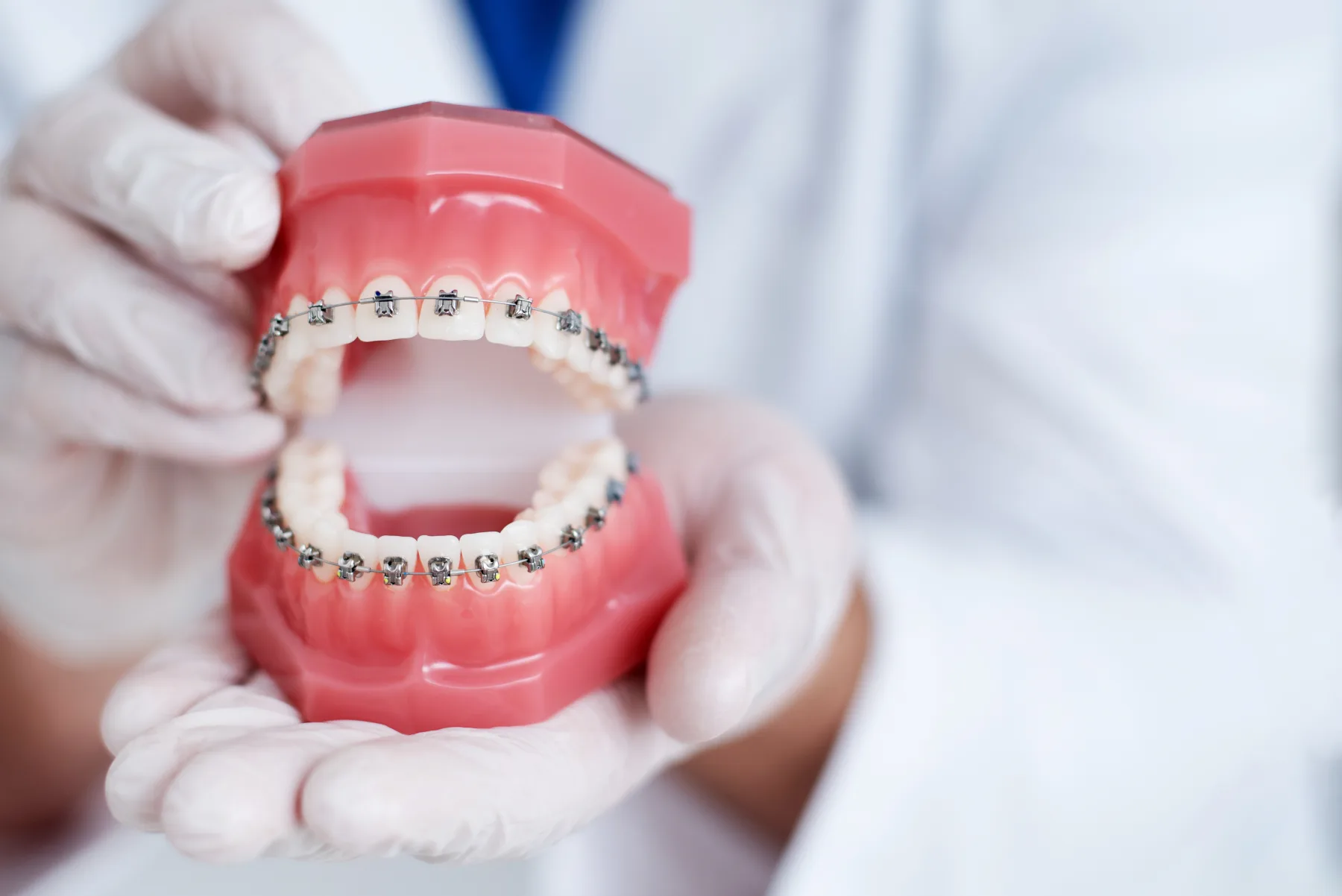
Braces and Invisalign can both create healthy, confident smiles. The more useful comparison is not which appliance is universally better, but which one fits the required tooth movement and the patient’s daily habits.
The biggest practical difference
Braces are bonded to the teeth and work continuously. Invisalign aligners are removable and generally need to be worn 20 to 22 hours each day. That distinction affects meals, cleaning, responsibility and the likelihood of losing or forgetting an appliance.
A patient who wants removability and can manage wear time may prefer aligners. Someone who does not want to track an appliance may appreciate fixed treatment. Neither choice eliminates the need for appointments, oral hygiene or retainers.
Appearance, comfort and eating
Invisalign is less noticeable, although tooth-colored attachments and elastics may be part of treatment. Ceramic braces also offer a subtler fixed option. Braces can temporarily irritate cheeks and lips; aligners may feel tight and can cause minor edge irritation or a short adjustment in speech.
Aligner patients remove trays to eat, so there are no appliance-related food restrictions. Braces patients avoid hard and sticky foods that can loosen brackets or bend wires. Both options require excellent cleaning to protect teeth and gums.
Which option handles complex treatment?
Modern aligners can treat many cases involving crowding, spacing and bite correction when planned by an experienced orthodontist. Braces provide direct fixed control and may be more efficient for certain rotations, vertical movements or complex mechanics.
Some cases can be treated predictably with either appliance; others have a clear clinical advantage with one. An examination is the appropriate place to discuss the tradeoffs instead of relying on a generic online checklist.
Is Invisalign cheaper than braces?
Neither option is always cheaper. In many comprehensive cases, Invisalign and metal braces may have similar fees because both require diagnosis, treatment planning, progress monitoring and retention. Clear ceramic braces or a particular aligner plan may carry a different fee. Compare the dedicated guides to Invisalign cost and braces cost in St. Louis.
Treatment complexity and what the estimate includes matter more than the appliance name. Compare records, monitoring visits, refinement aligners, emergency care, retainers and follow-up—not only an advertised starting price. OSSTL can compare appropriate options and provide exact fees after evaluating your smile.
Treatment time
Treatment length depends more on the correction and biological response than on the appliance name. Consistent aligner wear, elastic wear, oral hygiene and keeping appointments can all influence progress.
Invisalign is not automatically faster than braces, and braces are not automatically faster than Invisalign. The more predictable timeline comes from choosing an appliance suited to the required movements and following the plan consistently.
Braces vs. Invisalign for teens
For teenagers, the practical difference often comes down to responsibility. Braces remain attached and work continuously. Invisalign aligners generally need to be worn 20 to 22 hours each day, removed for meals and returned promptly. A responsible teen may appreciate the flexibility of aligners; someone who regularly loses belongings or resists routines may finish more predictably with braces.
School, sports, instruments and photographs can all be managed with either option. Aligners remove for meals and normal brushing, while braces eliminate the chance of losing trays. Athletes can use an appropriate mouthguard with either appliance. If both approaches can correct the bite predictably, the teen should participate in choosing the routine they are most likely to follow. Families can also review braces for teens and Invisalign for teens before the consultation.
Frequently asked questions
Is Invisalign cheaper than braces?+
Not necessarily. Comprehensive Invisalign and metal braces may have similar costs. Complexity, treatment length and what the fee includes determine the meaningful comparison.
Is Invisalign faster than braces?+
Not automatically. Duration depends on the movements required, biological response and patient cooperation.
Which option is easier to clean?+
Aligners are removed for brushing and flossing, which preserves a more familiar hygiene routine. Braces require cleaning around brackets and beneath wires.
Can I switch treatments midway?+
Sometimes, but a change can affect timing and cost. Discuss concerns with your orthodontist before changing appliances.